
Why on-site carbon verification cannot solve origin determination
By Christophe Lagrange, republished from Stainless Steel World Magazine, April 2026
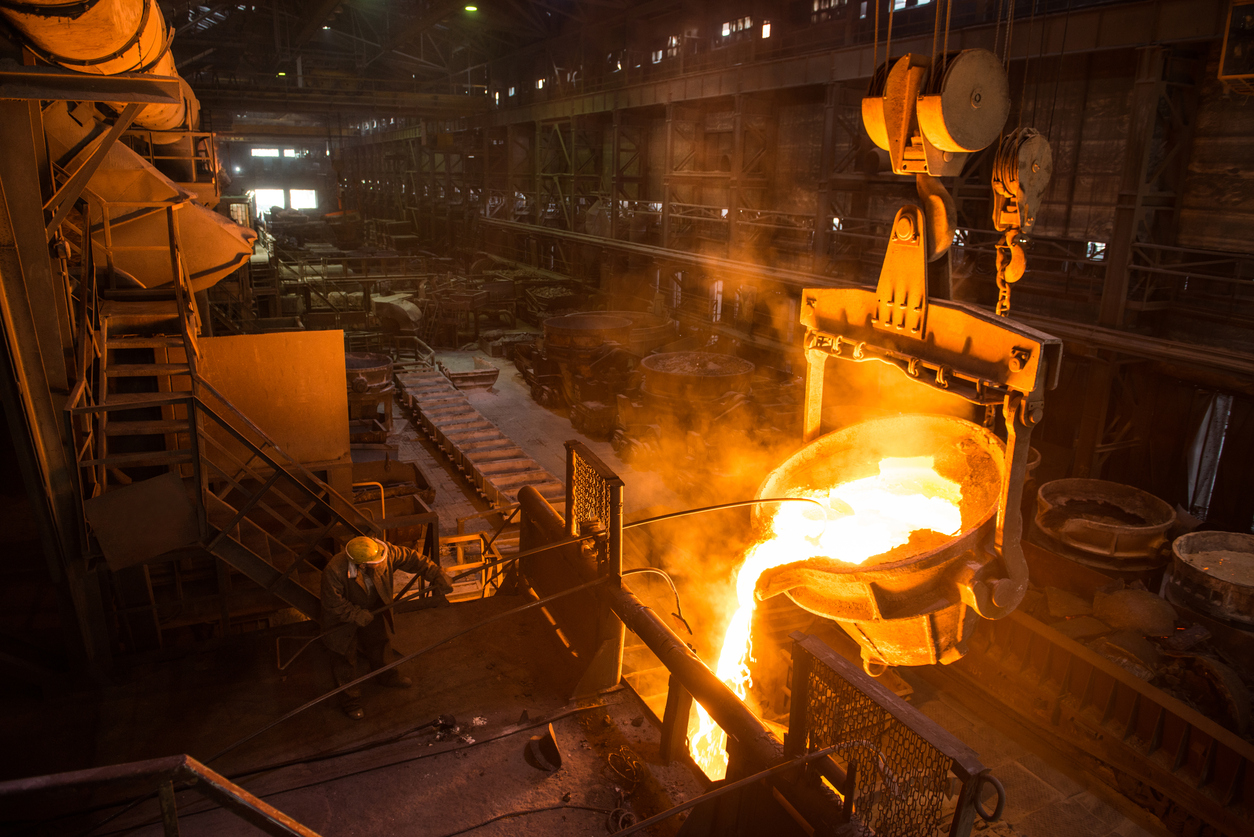
Across Brussels, a growing political consensus is forming around a concept that appears simple and decisive: the introduction, for certain steel products, of a Melt & Pour origin criterion – attributing origin not on the basis of the last substantial transformation, but on the place where the liquid steel was solidified.
The European Commission has floated it. EU Trade and Economic Security Commissioner Maroš Šefčovič appears favourable. Committees of the European Parliament have expressed support. Several Member States approve it. The Committee of the Regions has welcomed it. Only the Council has adopted a more cautious tone.
At the same time, another narrative is gaining ground: CBAM will make this easier. Under the CBAM framework, non-EU installations wishing to maintain effective access to the European market must accept independent verification of their production data, with verifiers granted access to relevant facilities, systems, and records. In practice, this means that production processes and material inputs are audited in order to validate reported emissions.
The reasoning appears straightforward. If verifiers already have access to production records and input data, if sourcing structures become more transparent, then establishing melt and pour origin should also become easier. This reasoning is appealing. It is also flawed.
Consider a CBAM verifier conducting an on-site assessment at a non-EU producer of welded stainless-steel tubes. In the warehouse, a consignment of finished tubes destined for export to the European Union is ready for shipment. Yet the verifier’s task is not to establish the emissions embedded in a specific lot of goods, but to assess overall emissions performance at installation level over the relevant period and determine an average emissions intensity per tonne of output. That average is then allocated proportionally across production, including the consignment of tubes in front of him. From a CBAM perspective, the exercise is coherent and complete.
Now imagine that this same verifier, with undiminished access to production records, input quantities, invoices, and internal documentation, were asked a different question: can you determine, with certainty, where the liquid steel contained in these tubes was melted? The verifier may identify the cold rolled coil from which the tubes were produced, as reflected in the installation’s records. Beyond that point, however, the verifier can no longer rely on direct observation. Any indication of melt origin ultimately rests on certificates issued by previous operators, which cannot be physically corroborated on site.
Even with full on-site access, the verifier cannot establish, with objective certainty, the country in which the liquid steel contained in those specific tubes was melted. The conclusion can extend no further than documentary consistency.
No single operator – and no single certificate – holds the complete, continuous chain linking the finished product to the original melt.
A fragmented documentary chain
Now shift perspective. Imagine the same consignment of tubes presented to a customs officer at the EU border under a Melt & Pour origin rule. The legal question is no longer about emissions. It is about origin. The declared melt country may determine whether the shipment is subject to substantial duties or benefits from a favourable quota allocation.
In Brussels, it is frequently suggested that the difficulty could be resolved by requiring importers to present the original mill test certificate issued by the steelmaker that performed the melt. At first glance, this appears decisive. In reality, that certificate refers to a primary product – typically a slab or billet – whose physical form and dimensions differ entirely from the finished tubes presented at importation.
Between that initial melt and the final product lie successive stages of rolling, division, and transformation. A single heat can generate multiple slabs. Each slab can be rolled into coils. Each coil can be divided into numerous downstream products supplied to different customers and processed in different facilities.
What connects these successive transformations is not a traceable physical continuity in the steel itself, but a fragmented documentary chain. Each operator issues a new certificate reflecting its own transformations, incorporating selected upstream data while superseding the previous document. No single operator – and no single certificate – holds the complete, continuous chain linking the finished product to the original melt.
By the time the tubes reach the EU border, no simple quantitative or physical correspondence exists between the original melt certificate and the specific lot of goods presented to customs. There is no laboratory method capable of identifying the country in which steel was melted. The melting stage leaves no chemical marker, no structural signature, no metallurgical fingerprint. The product itself does not reveal its birthplace. At this point, the system rests entirely on documentary trust.
No verifiable documentary link
Under CBAM, verification concerns data whose accuracy can be independently assessed: the documentation serves to compile information that is measurable, auditable, and objectively verifiable. Under a melt-and-pour rule, by contrast, the decisive issue becomes the authenticity of the documentary link between a specific lot of goods and a declared melt origin – a link that cannot be physically demonstrated.
When tariff treatment or quota access depends on that link, significant financial consequences attach to a criterion resting solely on documentary continuity – and ultimately on documentary trust. The higher the stakes, the more fragile that foundation becomes.
If a verifier with full on-site access cannot physically reconstruct melt origin with certainty, it is difficult to see how a customs authority operating at a distance could do so on the basis of documents alone. The customs officer is aware of the economic reality within which trade operates and recognises that both exporter and importer have a legitimate commercial interest in a declaration that secures the most favourable treatment available under the law – the exporter to remain competitive in the EU market, the importer to avoid substantial additional duties.
Precisely because significant financial consequences may depend on a single certificate, such documents inevitably attract heightened scrutiny. A certificate can be substituted and, in an increasingly digital environment, amended or even falsified with relative ease.
Where verification rests exclusively on documentary continuity, the system depends not on demonstrable material evidence but on the trust placed in the integrity of the documentation chain.
The practical consequence would be a shift of decision-making power from Brussels to the 27 national customs administrations responsible for applying the rule. Each operates within its own legal culture and administrative environment. Customs duties form part of the EU’s own resources, but Member States retain 25% as collection costs. In Member States hosting major seaports, where very large volumes are cleared, these retained amounts constitute a meaningful component of public revenue.
Faced with high financial stakes, customs authorities would inevitably scrutinise documentation differently, reflecting differences in administrative culture, enforcement priorities, resource constraints and the significant role that retained customs revenues play in national budgets. Some may accept certificates at face value. Others may require extensive supplementary evidence. Divergent interpretations could emerge. Identical consignments might be treated differently depending on the Member State of importation.
Transparency is one thing. Origin determination is another.
Potential fragmentation
What was conceived as a harmonised Union rule could, in practice, fragment into 27 enforcement approaches. Disputes would follow. Litigation before national courts — and ultimately before the Court of Justice — would be likely. None of this implies that enhanced traceability is undesirable. Greater transparency regarding primary steel inputs may well contribute to improved monitoring of trade flows and supply chain resilience.
A melt-and-pour reporting requirement, if conceived strictly as a transparency tool without fiscal, quota-related, or origin-determining consequences, would not raise structural difficulties. In such a framework, operators would have little incentive to contest or obscure information. The difficulty arises only if melt-stage origin becomes determinative for tariff treatment, quota allocation, or the attribution of non-preferential origin.
In that case, significant financial and legal consequences would attach to a criterion that cannot be physically verified and that rests exclusively on documentary continuity. That is where legal uncertainty begins.
The current Union Customs Code framework, attributing origin on the basis of the last substantial transformation, offers clarity and operational predictability. Replacing or displacing that logic with a melt-stage criterion would fundamentally alter the structure of origin determination. If Melt & Pour traceability is to be introduced, clarity about its legal function is therefore essential. Transparency is one thing. Origin determination is another.
Related Articles


Case Documents
Please log in as a member to consult all related case documents.
